The Making of Roughrider Coin
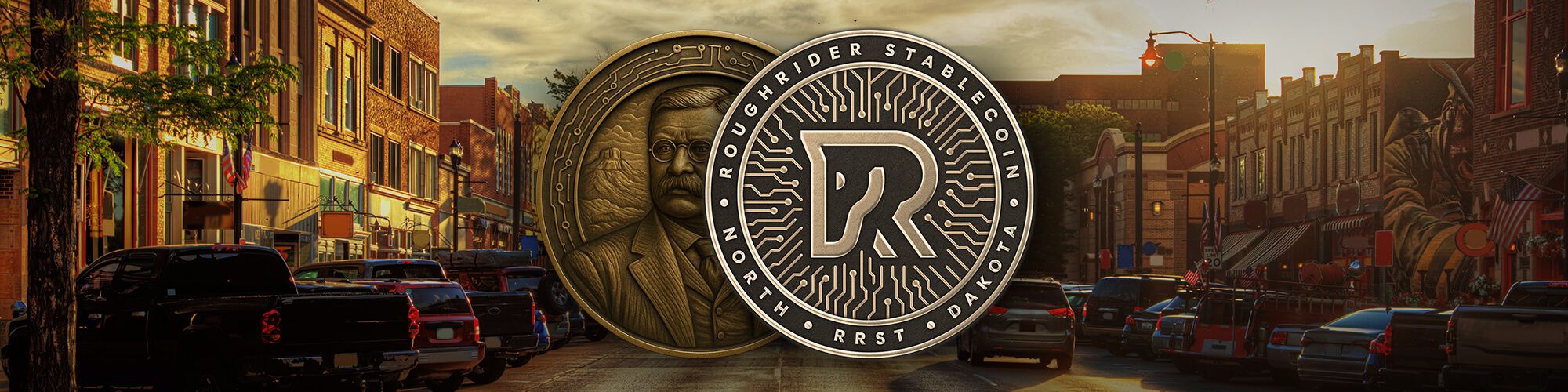
Inside Bank of North Dakota’s quest to launch a stablecoin
The idea for the Bank of North Dakota’s (BND’s) Roughrider Coin sprang to life around 7 on a January morning at Kroll’s Diner on Bismarck’s main drag.
Three people – BND CEO and President Don Morgan, Chief Innovation Officer Rick Geloff and Sunil Sachdev, Fiserv head of embedded finance and digital assets – gathered at a booth in the quiet restaurant and started talking about stablecoins. A stablecoin is a blockchain-based digital currency designed to maintain a stable value, typically by being tied to an asset such as the U.S. dollar.
That conversation was the start of what Morgan described as the bank’s response to fintech challenges and opportunities.
“There are a lot of nonbanking institutions competing with financial institutions,” he said. “If our 91 independently owned financial institutions are under threat or end up with less liquidity or less funding, that puts the entirety of our model under threat.”
A unique banking model
BND, which formed in 1919 to support agriculture, commerce and industry, is the nation’s only state-owned bank. It’s structured to partner with financial institutions in the state by supporting their lending and liquidity needs rather than competing with them.
The heart of the Roughrider plan from the start was to prepare those network partners for the next evolution in banking, Geloff said. But participation is voluntary based on their strategic needs.
“We want them to be along for the ride for as long as they want so they can help their customers in these rural communities of North Dakota and flourish in that financial ecosystem,” he said. “Our connections in Fiserv allowed us to get down this path and really put together that business use case to get it over the finish line.”
The Roughrider use case
BND chose to take the lead in developing a stablecoin to accomplish two strategic goals.
First, Roughrider Coin could introduce efficiencies and make the network more nimble, profitable and leaner in moving money. Second, Morgan said, the move could create long-term competitiveness, relevance and resilience for the community banking and credit union industry.
“We didn't see anybody else stepping up in the space to build anything specifically for community banks and credit unions,” he said. “That really is why we're moving forward from a strategic standpoint so aggressively in this space.”
Banks often have big back rooms with operational employees and systems tracking ACH, wires and other processes, such as reconciliation. Blockchain-enabled payment rails, on the other hand, hold the potential to move money faster, more securely and at lower cost.
BND’s reason for adopting blockchain and stablecoins, though, had to be more specific than “protecting the future of the North Dakota model.” The use case had to target benefits for the financial institutions BND serves.
BND tried to find the lowest-risk stablecoin application as a test and landed on bank-to-bank transactions, Geloff said.
“We can see how the transactions look on the blockchain,” he said. “We can monitor the actual ACH rail. We can get people familiar with the digital asset platform. We can do all those things in a crawl, walk, run fashion so that sooner or later, we can scale this thing up to incorporate all those financial institutions.”
The “crawl” part of that approach is critical, Morgan said. While the bank sees many use cases over the next decade for Roughrider Coin, it’s starting out as simple as possible.
“We’re going to take it slow and learn and test it and figure out what works and what doesn't,” he said. “We're bankers. We've been through this a lot in our careers. We like to go slow and thoughtful and always be the adult in the room.”
A focus on education
An idea such as Roughrider Coin is only as good as the acceptance it receives. It was clear the leadership across the state’s interbank network was wary of stablecoin, fintech and blockchain based on the complexity of a rapidly changing industry, Morgan said, so BND set out to change that perception.
The bank established ongoing education every spring and fall for its community bank and credit union partners. Since then, the bank’s role as a fintech educational resource has extended beyond the partner institutions to legislators, constituents and the elected officials on the bank’s board.
“If you're not eating, living and breathing it every day, it's hard to understand,” Morgan said. “We're doing it for the protection and resiliency of our unique model that has served North Dakota for over a century. We want it to exist for another century.”
If the education aspect plays out as planned, Geloff said, the partner institutions eventually will lead the way toward new use cases, whether that’s tokenizing loans and smart contracts or changing how consumers move money.
“The biggest thing that we're trying to evolve into,” he said, “is allowing them to test the environment, see into these types of transactions and get comfortable with it.”
A look under the hood
Roughrider Coin is a hybrid deposit token and stablecoin because the focus is on keeping deposits at each institution.
That requires an API integration into the banking core so the funds can move into a separate concentration account held at each institution, Geloff said. The files move from one institution to another, and the money still moves on traditional rail systems.
“We're really using it as a trust factor so people can use the cash as if that cash is at their institution,” he said, “knowing that we in good faith are protecting it on the backside and moving those funds at a certain time during the day.”
It took a complete team of the bank’s boards and executives and Fiserv to get it done. Fiserv, Geloff said, helped everyone involved in the process get comfortable with the API integration and risk mitigation.
“The ability to manage third and fourth parties inside of a financial institution and the relationships that you develop with those individuals in your tech stack is crucial,” he said. “It's making sure that you have a texting relationship with most of these people, that you can freely state what's going on in a way that is constructive and that you're all trying to get to the end line.”
Where banking meets blockchain
That early morning conversation at Kroll’s set off a chain of events that led BND to evolve its services and blend banking and blockchain.
But that’s just the latest variation of what the bank’s leadership over the years has done for the institution and its partners, Morgan said. They’ve guided their stakeholders through different banking evolutions, and Roughrider Coin and the broader fintech movement represent the most recent industry change.
Consumers, he said, are changing their behavior and expectations for speed and convenience, and it’s up to financial institutions to adapt.
“You may not see it in your numbers yet, but that behavior is changing in the way they want to interact with money and the partners they're choosing,” he said. “We as an industry have to do the hard work so 10 years from now, we are providing what that customer base wants.”

Discover additional insights